
Why Broadcasters Struggle With Real-Time Sports Content and How Zentag AI Fixes It
Broadcasters struggle to keep up with the demand for real-time sports content. Learn how AI automation and Zentag AI are fixing the speed bottleneck in live production
Broadcasters struggle to keep up with the demand for real-time sports content. Learn how AI automation and Zentag AI are fixing the speed bottleneck in live production

Shubhamm G
Shubhamm G
Content Writer @zentagai
Sports Broadcasting, Media Tech, Video Highlight Generation, Automated Highlights
Sports Broadcasting, Media Tech, Video Highlight Generation, Automated Highlights
Broadcasters have spent years pouring money into top-tier cameras, massive crews, and slick distribution platforms. But despite all that heavy infrastructure, one headache just won’t go away: speed. We aren’t talking about speed on the field, we’re talking about how fast content gets out the door.
Fans want moments, not just matches. They expect to see the highlights while the game is still alive, not hours after the final whistle. For sports broadcasters and OTT platforms, trying to keep up with that insatiable demand has turned into one of the biggest operational challenges in modern media.
The Reality of Live Sports Production
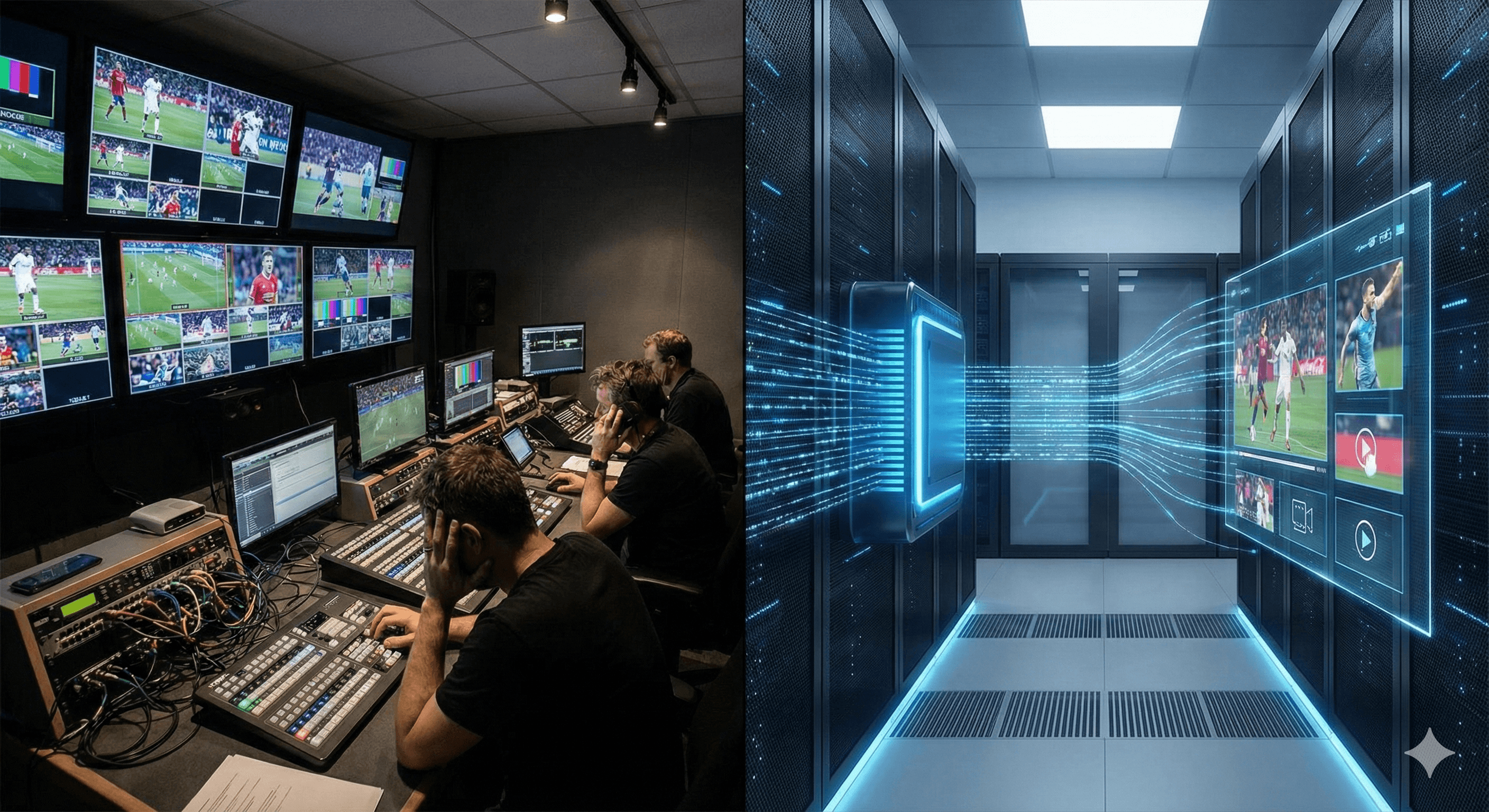
Live sports production is messy. You often have multiple matches running at once, and the action peaks without warning. Editors are stuck trying to spot key plays, clip them, format them, and publish them everywhere instantly, all while the clock is ticking.
On paper, it sounds manageable. In the control room, it creates constant bottlenecks.
Editors simply can’t watch every feed at the same time. Crucial moments get delayed or missed entirely. Content teams end up constantly reacting to the game instead of staying ahead of it. When your output relies 100% on manual effort, real-time sports content becomes incredibly fragile.
Where Traditional Workflows Break Down
Most broadcasting setups were built for a different era, post-match storytelling. That model was fine when highlights were saved for the evening news or next-day recaps. But it doesn’t work anymore.
Today, the cracks in the system are obvious:
Editors are swamped during live events.
Delays pile up while waiting for manual reviews and clipping.
Formats are inconsistent across different platforms.
Production costs skyrocket just to keep up with live coverage.
It’s hard to scale coverage across niche sports or different regions.
These aren’t creative problems, they are operational ones. And they are the main reason modern sports broadcasting challenges persist.
Why Speed Is Now a Competitive Advantage
The platforms winning the attention war today are the ones that publish first. A goal clipped and shared in seconds gets massive engagement; that same clip, posted ten minutes later, is old news.
This shift has pushed broadcasters toward live sports content automation, not as a nice-to-have luxury, but as a survival necessity. Automation allows systems to react instantly, doing something human teams simply can’t do at scale when the pressure is on.
The goal isn’t perfection. It’s relevance.
How Automation Changes the Equation
Automation takes the frantic reaction time out of the loop. Instead of waiting for an editor to spot a play, automated systems analyze the feed continuously and respond the split-second something big happens.
This doesn’t mean kicking humans out of the process. It means letting technology handle the grunt work, the repetitive, time-critical tasks, so editorial teams can focus on the decisions that actually need human judgment.
This is where AI-driven media workflows really start to shine. They lower the stress levels, keep the quality consistent, and let teams handle way more content without needing to hire an army of new editors.
Where Zentag AI Fits Naturally
As the industry shifts, platforms like Zentag AI are getting noticed because they tackle the specific pain point broadcasters are feeling: how to produce timely sports content without burning out the team.
Zentag AI automates highlight detection and preparation in real time, keeping content moving fast through the pipeline. Instead of throwing more editors at the problem to chase speed, teams can lean on automation to handle the initial heavy lifting.
The result isn’t just faster publishing; it’s a smoother operation, especially when live events get chaotic.
Smaller Teams, Bigger Output
One of the best (and often overlooked) perks of automation is accessibility. Smaller leagues and regional broadcasters usually struggle the most with live content because they don't have the budget for massive production teams.
With automation in place, these organizations can punch above their weight, producing professional-grade highlights without a massive investment. It levels the playing field, allowing for high-quality coverage outside of just the top-tier leagues.
In this way, live sports content automation isn’t just about efficiency, it’s about opportunity.
What Changes When Workflows Become Smarter
When automation takes care of the basics, the team dynamic changes:
Editors spend less time scrubbing through hours of footage.
Producers can focus on storytelling and strategy.
Content hits the feed faster and more consistently.
Teams can scale up their output without burnout.
These improvements directly fix the long-standing issues that manual workflows could never fully solve.
Looking Ahead
The hunger for real-time content isn’t going away. If anything, it’s going to get more intense as platforms and audiences fragment even further.
Broadcasters that treat automation as a core part of their workflow, rather than just an add-on, will be ready for what comes next. Those who stick to manual processes are going to keep struggling under the pressure.
The future of sports media belongs to the teams that can move fast, scale smart, and deliver moments while they still matter.
Conclusion
Real-time sports content is the standard fans expect now, but delivering it consistently is still one of the hardest jobs in broadcasting. Manual workflows just can’t keep up with the sheer pace and volume of modern sports.
By adopting AI-driven media workflows and embracing live sports content automation, broadcasters can stop scrambling and start engaging. Solutions like Zentag AI prove that you don’t have to trade quality for speed, you can actually have both.
And in today’s media landscape, finding that balance makes all the difference.
Broadcasters have spent years pouring money into top-tier cameras, massive crews, and slick distribution platforms. But despite all that heavy infrastructure, one headache just won’t go away: speed. We aren’t talking about speed on the field, we’re talking about how fast content gets out the door.
Fans want moments, not just matches. They expect to see the highlights while the game is still alive, not hours after the final whistle. For sports broadcasters and OTT platforms, trying to keep up with that insatiable demand has turned into one of the biggest operational challenges in modern media.
The Reality of Live Sports Production
Live sports production is messy. You often have multiple matches running at once, and the action peaks without warning. Editors are stuck trying to spot key plays, clip them, format them, and publish them everywhere instantly, all while the clock is ticking.
On paper, it sounds manageable. In the control room, it creates constant bottlenecks.
Editors simply can’t watch every feed at the same time. Crucial moments get delayed or missed entirely. Content teams end up constantly reacting to the game instead of staying ahead of it. When your output relies 100% on manual effort, real-time sports content becomes incredibly fragile.
Where Traditional Workflows Break Down
Most broadcasting setups were built for a different era, post-match storytelling. That model was fine when highlights were saved for the evening news or next-day recaps. But it doesn’t work anymore.
Today, the cracks in the system are obvious:
Editors are swamped during live events.
Delays pile up while waiting for manual reviews and clipping.
Formats are inconsistent across different platforms.
Production costs skyrocket just to keep up with live coverage.
It’s hard to scale coverage across niche sports or different regions.
These aren’t creative problems, they are operational ones. And they are the main reason modern sports broadcasting challenges persist.
Why Speed Is Now a Competitive Advantage
The platforms winning the attention war today are the ones that publish first. A goal clipped and shared in seconds gets massive engagement; that same clip, posted ten minutes later, is old news.
This shift has pushed broadcasters toward live sports content automation, not as a nice-to-have luxury, but as a survival necessity. Automation allows systems to react instantly, doing something human teams simply can’t do at scale when the pressure is on.
The goal isn’t perfection. It’s relevance.
How Automation Changes the Equation
Automation takes the frantic reaction time out of the loop. Instead of waiting for an editor to spot a play, automated systems analyze the feed continuously and respond the split-second something big happens.
This doesn’t mean kicking humans out of the process. It means letting technology handle the grunt work, the repetitive, time-critical tasks, so editorial teams can focus on the decisions that actually need human judgment.
This is where AI-driven media workflows really start to shine. They lower the stress levels, keep the quality consistent, and let teams handle way more content without needing to hire an army of new editors.
Where Zentag AI Fits Naturally
As the industry shifts, platforms like Zentag AI are getting noticed because they tackle the specific pain point broadcasters are feeling: how to produce timely sports content without burning out the team.
Zentag AI automates highlight detection and preparation in real time, keeping content moving fast through the pipeline. Instead of throwing more editors at the problem to chase speed, teams can lean on automation to handle the initial heavy lifting.
The result isn’t just faster publishing; it’s a smoother operation, especially when live events get chaotic.
Smaller Teams, Bigger Output
One of the best (and often overlooked) perks of automation is accessibility. Smaller leagues and regional broadcasters usually struggle the most with live content because they don't have the budget for massive production teams.
With automation in place, these organizations can punch above their weight, producing professional-grade highlights without a massive investment. It levels the playing field, allowing for high-quality coverage outside of just the top-tier leagues.
In this way, live sports content automation isn’t just about efficiency, it’s about opportunity.
What Changes When Workflows Become Smarter
When automation takes care of the basics, the team dynamic changes:
Editors spend less time scrubbing through hours of footage.
Producers can focus on storytelling and strategy.
Content hits the feed faster and more consistently.
Teams can scale up their output without burnout.
These improvements directly fix the long-standing issues that manual workflows could never fully solve.
Looking Ahead
The hunger for real-time content isn’t going away. If anything, it’s going to get more intense as platforms and audiences fragment even further.
Broadcasters that treat automation as a core part of their workflow, rather than just an add-on, will be ready for what comes next. Those who stick to manual processes are going to keep struggling under the pressure.
The future of sports media belongs to the teams that can move fast, scale smart, and deliver moments while they still matter.
Conclusion
Real-time sports content is the standard fans expect now, but delivering it consistently is still one of the hardest jobs in broadcasting. Manual workflows just can’t keep up with the sheer pace and volume of modern sports.
By adopting AI-driven media workflows and embracing live sports content automation, broadcasters can stop scrambling and start engaging. Solutions like Zentag AI prove that you don’t have to trade quality for speed, you can actually have both.
And in today’s media landscape, finding that balance makes all the difference.
Broadcasters have spent years pouring money into top-tier cameras, massive crews, and slick distribution platforms. But despite all that heavy infrastructure, one headache just won’t go away: speed. We aren’t talking about speed on the field, we’re talking about how fast content gets out the door.
Fans want moments, not just matches. They expect to see the highlights while the game is still alive, not hours after the final whistle. For sports broadcasters and OTT platforms, trying to keep up with that insatiable demand has turned into one of the biggest operational challenges in modern media.
The Reality of Live Sports Production
Live sports production is messy. You often have multiple matches running at once, and the action peaks without warning. Editors are stuck trying to spot key plays, clip them, format them, and publish them everywhere instantly, all while the clock is ticking.
On paper, it sounds manageable. In the control room, it creates constant bottlenecks.
Editors simply can’t watch every feed at the same time. Crucial moments get delayed or missed entirely. Content teams end up constantly reacting to the game instead of staying ahead of it. When your output relies 100% on manual effort, real-time sports content becomes incredibly fragile.
Where Traditional Workflows Break Down
Most broadcasting setups were built for a different era, post-match storytelling. That model was fine when highlights were saved for the evening news or next-day recaps. But it doesn’t work anymore.
Today, the cracks in the system are obvious:
Editors are swamped during live events.
Delays pile up while waiting for manual reviews and clipping.
Formats are inconsistent across different platforms.
Production costs skyrocket just to keep up with live coverage.
It’s hard to scale coverage across niche sports or different regions.
These aren’t creative problems, they are operational ones. And they are the main reason modern sports broadcasting challenges persist.
Why Speed Is Now a Competitive Advantage
The platforms winning the attention war today are the ones that publish first. A goal clipped and shared in seconds gets massive engagement; that same clip, posted ten minutes later, is old news.
This shift has pushed broadcasters toward live sports content automation, not as a nice-to-have luxury, but as a survival necessity. Automation allows systems to react instantly, doing something human teams simply can’t do at scale when the pressure is on.
The goal isn’t perfection. It’s relevance.
How Automation Changes the Equation
Automation takes the frantic reaction time out of the loop. Instead of waiting for an editor to spot a play, automated systems analyze the feed continuously and respond the split-second something big happens.
This doesn’t mean kicking humans out of the process. It means letting technology handle the grunt work, the repetitive, time-critical tasks, so editorial teams can focus on the decisions that actually need human judgment.
This is where AI-driven media workflows really start to shine. They lower the stress levels, keep the quality consistent, and let teams handle way more content without needing to hire an army of new editors.
Where Zentag AI Fits Naturally
As the industry shifts, platforms like Zentag AI are getting noticed because they tackle the specific pain point broadcasters are feeling: how to produce timely sports content without burning out the team.
Zentag AI automates highlight detection and preparation in real time, keeping content moving fast through the pipeline. Instead of throwing more editors at the problem to chase speed, teams can lean on automation to handle the initial heavy lifting.
The result isn’t just faster publishing; it’s a smoother operation, especially when live events get chaotic.
Smaller Teams, Bigger Output
One of the best (and often overlooked) perks of automation is accessibility. Smaller leagues and regional broadcasters usually struggle the most with live content because they don't have the budget for massive production teams.
With automation in place, these organizations can punch above their weight, producing professional-grade highlights without a massive investment. It levels the playing field, allowing for high-quality coverage outside of just the top-tier leagues.
In this way, live sports content automation isn’t just about efficiency, it’s about opportunity.
What Changes When Workflows Become Smarter
When automation takes care of the basics, the team dynamic changes:
Editors spend less time scrubbing through hours of footage.
Producers can focus on storytelling and strategy.
Content hits the feed faster and more consistently.
Teams can scale up their output without burnout.
These improvements directly fix the long-standing issues that manual workflows could never fully solve.
Looking Ahead
The hunger for real-time content isn’t going away. If anything, it’s going to get more intense as platforms and audiences fragment even further.
Broadcasters that treat automation as a core part of their workflow, rather than just an add-on, will be ready for what comes next. Those who stick to manual processes are going to keep struggling under the pressure.
The future of sports media belongs to the teams that can move fast, scale smart, and deliver moments while they still matter.
Conclusion
Real-time sports content is the standard fans expect now, but delivering it consistently is still one of the hardest jobs in broadcasting. Manual workflows just can’t keep up with the sheer pace and volume of modern sports.
By adopting AI-driven media workflows and embracing live sports content automation, broadcasters can stop scrambling and start engaging. Solutions like Zentag AI prove that you don’t have to trade quality for speed, you can actually have both.
And in today’s media landscape, finding that balance makes all the difference.
Q&A
How does Zentag AI solve the "speed problem" in live sports broadcasting?
Can Zentag AI integrate into existing media workflows without replacing editors?
What makes Zentag AI different from other video editing tools?
Is Zentag AI suitable for smaller leagues and regional broadcasters?
How does Zentag AI ensure accuracy in highlight detection?
Q&A
How does Zentag AI solve the "speed problem" in live sports broadcasting?
Can Zentag AI integrate into existing media workflows without replacing editors?
What makes Zentag AI different from other video editing tools?
Is Zentag AI suitable for smaller leagues and regional broadcasters?
How does Zentag AI ensure accuracy in highlight detection?
Q&A
How does Zentag AI solve the "speed problem" in live sports broadcasting?
Can Zentag AI integrate into existing media workflows without replacing editors?
What makes Zentag AI different from other video editing tools?
Is Zentag AI suitable for smaller leagues and regional broadcasters?
How does Zentag AI ensure accuracy in highlight detection?
Q&A
How does Zentag AI solve the "speed problem" in live sports broadcasting?
Can Zentag AI integrate into existing media workflows without replacing editors?
What makes Zentag AI different from other video editing tools?
Is Zentag AI suitable for smaller leagues and regional broadcasters?
How does Zentag AI ensure accuracy in highlight detection?
Product related content
How Real-Time Recaps Drive Fan Engagement and Revenue for Sports OTT
01.11.2025

Exploring automated content creation in sports: AI highlights, real-time clips, fan engagement, and revenue growth for leagues worldwide
09.10.2025

How Emotion, Authenticity and Smart Automation Are Redefining Brand–Fan Connections
09.10.2025

Product related content
How Real-Time Recaps Drive Fan Engagement and Revenue for Sports OTT
01.11.2025
Exploring automated content creation in sports: AI highlights, real-time clips, fan engagement, and revenue growth for leagues worldwide
09.10.2025
How Emotion, Authenticity and Smart Automation Are Redefining Brand–Fan Connections
09.10.2025
Product related content
How Real-Time Recaps Drive Fan Engagement and Revenue for Sports OTT
01.11.2025
Exploring automated content creation in sports: AI highlights, real-time clips, fan engagement, and revenue growth for leagues worldwide
09.10.2025
How Emotion, Authenticity and Smart Automation Are Redefining Brand–Fan Connections
09.10.2025
Wallstraße 9, 10179 Berlin
©2025 Zentag AI. All rights reserved
Wallstraße 9, 10179 Berlin
©2025 Zentag AI. All rights reserved
Wallstraße 9, 10179 Berlin
©2025 Zentag AI. All rights reserved
Wallstraße 9, 10179 Berlin
©2025 Zentag AI. All rights reserved
©2025 Zentag AI. All rights reserved
Wallstraße 9, 10179 Berlin
sales@zentag.ai


